Jacks or Better Royal: How Hard to Hit?
The mathematical reality of landing a royal flush in Jacks or Better is brutal: 1 in 40,390 hands on the deal, and roughly 1 in 40,000 across every draw cycle you will ever play. That number is not a motivational slogan, it is a cold hard wall. 🎰 Anyone who tells you a royal is "due" after a dry streak is selling you a fantasy built on gambler's fallacy. The machine has no memory, no pity, and no debt to you.
Strip the game down and you get 2,598,960 possible five-card combinations from a 52-card deck. Exactly four of them are royal flushes in their dealt form. That yields the 1 in 649,740 figure for a pat royal on the initial deal alone. Once you factor in the optimal hold-and-draw strategy, the cumulative probability per hand settles near 1 in 40,000. That is the true grind, and it is why a Jacks or Better royal flush is the single most overrated event in video poker folklore.
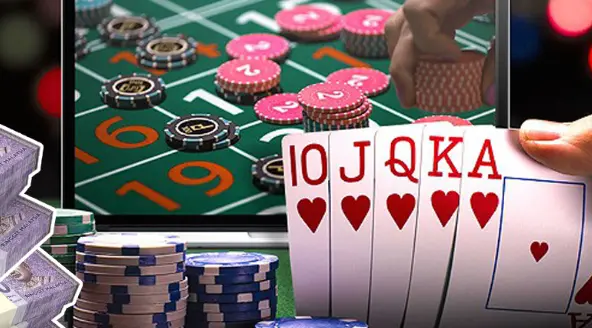
The Real Probability Math Behind the Chase
Here is the piece most players never internalize: the royal is a byproduct of correct play, not a target you can force. When you hold four cards to a royal, you have exactly one out in 47 remaining cards — a 2.13% shot. Chase that on a full-pay 9/6 machine and the expected value collapses compared to holding a made flush or a high pair. The math does not care about your feelings. 😤
Run the variance simulation and the picture gets uglier. At 600 hands per hour, the mean time between royals sits around 66 hours of continuous play. Standard deviation means a 200-hour drought is entirely normal, and so is two royals in twenty minutes. Variance is not a bug in video poker probability, it is the entire engine. Players who cannot stomach a 150,000-hand gap between royals have no business playing for the top prize.

Why Full-Pay Tables Change Everything
The royal's contribution to return is roughly 2% of the total 99.54% on a 9/6 Jacks or Better paytable. Remove the royal and that game drops to about 97.5%. This is the hidden trap: the royal is not the icing, it is a structural load-bearing wall. On a 6/5 paytable the royal still pays 4,000 credits on a five-credit bet, but the rest of the paytable bleeds you dry long before the jackpot arrives. The house edge lives in the lower tiers, not the royal.
Here is the technical gut punch. A royal flush contributes only 1.98% to the machine's overall return, yet it consumes the psychological energy of every player at the bar. The 4,000-credit payout on a 5-credit max bet is a 800x multiplier, and the optimal strategy that unlocks it demands flawless holds on four-card royals, three-card royals with two high cards, and even the painful sacrifice of a pat straight to chase the draw. Get one hold wrong and you bleed EV at a rate of a few cents per hand — invisible in the short run, catastrophic across 100,000 hands.
The Brutal Truth About Hitting It
So how hard is it? Hard enough that most recreational players will never see one in a single session, and hard enough that the expected wait is measured in tens of thousands of hands. 💀 The royal is a long-tail event baked into a game whose real profit lives in the grind of marginal decisions — holding the low pair, dumping the kicker, respecting the penalty-card exceptions. Chase the royal as a goal and you will over-hold and under-earn. Play the strategy chart as written and the royal becomes a statistical inevitability that arrives on its own schedule, at 1 in 40,390 hands per deal and roughly one every 40,000 hands overall.